Table of Contents
ToggleWrist BP Monitor in Pakistan — Why Home Tracking Is Becoming the Norm
Blood pressure used to be something people checked only during a clinic visit — often once every few months. That’s changing fast. A Wrist Bp Monitor in Pakistan is increasingly common in households, letting people track a number that can shift daily, rather than relying on a single occasional snapshot.
Here’s why home BP monitoring is catching on, and how to actually get accurate readings from a wrist device.
Why BP Awareness Is Growing in Pakistan
Hypertension is often called a “silent” condition because it frequently produces no noticeable symptoms until it becomes serious. That’s exactly why medical guidance increasingly points toward regular home monitoring rather than waiting for annual or occasional clinic checkups to catch a problem.
A few factors are driving the shift toward home devices specifically:
- Rising urban lifestyle stress and dietary shifts have made hypertension a more visible health concern across Pakistan’s cities.
- Doctors are actively recommending home monitoring between visits, since a single clinic reading can be skewed by “white coat syndrome” — the anxiety spike some people experience specifically during a medical appointment.
- Aging populations living independently benefit from family members being able to track BP remotely through shared readings and simple daily routines.
Why Wrist Monitors Specifically Are Gaining Popularity
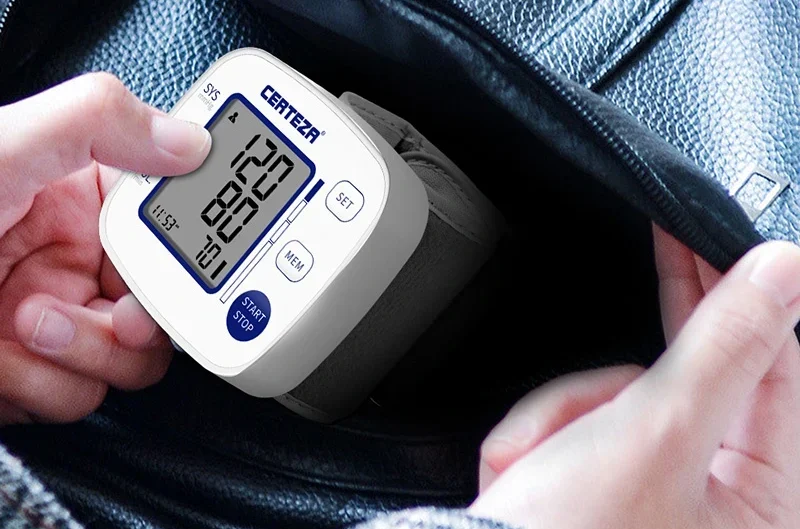
Traditional upper-arm cuffs have long been the clinical standard, but a Wrist Bp Monitor in Pakistan offers a few practical advantages for everyday home use:
1. Compact and Travel-Friendly
Wrist devices are smaller and lighter, making them easy to pack for travel or keep in a bag for office use.
2. Faster, Simpler Daily Use
The lighter cuff design makes quick daily checks more convenient, which supports the kind of consistent tracking that actually produces useful trend data over time.
3. Comfortable for Frequent Use
For people checking BP once or twice daily, the smaller wrist cuff tends to feel less restrictive than a bulkier upper-arm unit over repeated use.
Upper-arm monitors are still often preferred for people with irregular heart rhythms, since wrist positioning sensitivity can introduce more variability in certain cases — worth discussing with a doctor if that applies to you.
How to Get an Accurate Wrist BP Reading
Technique matters more with wrist devices than with upper-arm cuffs, since positioning has a bigger impact on accuracy. Follow these steps carefully:
- Rest quietly, seated, for at least 5 minutes before measuring.
- Keep the wrist at heart level throughout the reading — this is the single most common mistake people make.
- Sit with your back supported and feet flat on the floor.
- Avoid caffeine, exercise, or smoking for 30 minutes beforehand.
- Stay still and avoid talking during the measurement.
- Take readings at consistent times daily — morning and evening are commonly recommended for trend tracking.
What the Numbers Mean
Blood pressure readings show two numbers: systolic (the pressure when your heart beats) over diastolic (the pressure when your heart rests between beats). Normal, elevated, and high ranges are defined by medical guidelines, and any consistently high or unusual readings should be discussed with a doctor rather than self-interpreted.
Building a Simple Home Monitoring Routine
The real value of a Wrist Blood Pressure Monitor in Pakistan isn’t a single reading — it’s the pattern that emerges from tracking daily over weeks and months. Many devices include built-in memory to store past readings, making it easy to spot trends and share accurate data with your doctor at your next visit.
Which Model Fits Your Household
We carry two well-reviewed options depending on your needs: the Certeza BM 300 Wrist Blood Pressure Apparatus for straightforward daily tracking with irregular heartbeat detection, or the Certeza BM 307 Wrist Type BP Apparatus if you need dual-user memory for tracking more than one family member’s readings on a single device.
For general, non-commercial reference on understanding blood pressure categories, the American Heart Association’s guide to blood pressure readings is a trustworthy external resource.