Table of Contents
ToggleVitiligo Treatment in Pakistan — What’s Actually True, and What’s Just a Myth
Few skin conditions carry as much social stigma in Pakistan as vitiligo. Despite being a well-documented, non-contagious medical condition, misinformation still spreads faster than facts — and that gap is exactly why searches for Vitiligo Treatment in Pakistan have climbed steadily as more people look for real answers instead of rumors.
This post breaks down what vitiligo actually is, clears up the most common myths, and lays out realistic options for managing it.
What Is Vitiligo, Really?
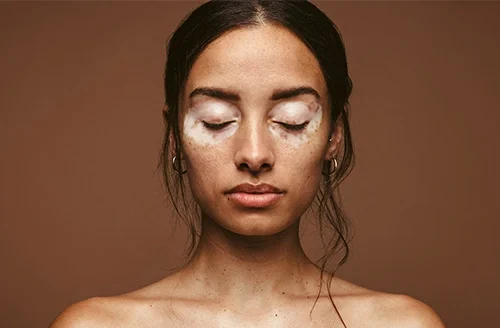
Vitiligo occurs when the cells responsible for skin pigment — melanocytes — stop functioning or are destroyed, leaving lighter or white patches on the skin. It’s considered an autoimmune-related condition, meaning the body’s immune system plays a role in the pigment loss, rather than any external contamination or infection.
It can appear on any part of the body, at any age, and affects people of all skin tones — though the contrast is often more visually noticeable on deeper skin tones, which is part of why it draws so much unwarranted attention in South Asian communities.
Common Myths About Vitiligo in Pakistan
Searches for Vitiligo Treatment in Pakistan often come tangled up with outdated beliefs. Let’s separate fact from fiction:
Myth: Vitiligo is contagious. False. It cannot spread through touch, shared utensils, or any form of contact. This is one of the most damaging myths, as it fuels unnecessary social isolation for people living with the condition.
Myth: It’s caused by eating “incompatible” food combinations. False. There’s no credible medical evidence linking specific food pairings to vitiligo onset.
Myth: It’s a punishment or a curse. False, and harmful. Vitiligo is a documented medical condition with a biological basis, not a moral or spiritual failing.
Myth: It can be cured overnight with the right cream. Also false. No topical product — herbal or otherwise — guarantees permanent repigmentation on its own.
What Actually Helps: Realistic Management Options
There’s no single universal cure for vitiligo, but a combination approach, guided by a dermatologist, tends to produce the best outcomes:
1. Dermatologist Diagnosis First
Before starting any treatment, a professional diagnosis confirms it is in fact vitiligo (rather than another cause of skin discoloration) and helps map out realistic next steps.
2. Topical Treatments
Some patients use topical creams — including herbal formulations — as a supportive part of their skincare routine, alongside professional guidance rather than as a standalone fix.
3. Light-Based Therapies
Dermatologists sometimes recommend phototherapy for certain patients, though this requires clinical supervision and isn’t appropriate for everyone.
4. Sun Protection
Because affected patches lack natural pigment protection, they’re more vulnerable to sunburn. Daily sunscreen on exposed areas is a simple, evidence-backed step regardless of what other treatment path someone chooses.
5. Mental Health Support
Given the social stigma still attached to visible skin conditions in Pakistan, many dermatology-adjacent resources now emphasize psychological support as part of comprehensive vitiligo care — not just the physical treatment.
Why “Vitiligo Treatment in Pakistan” Searches Are Rising
A few real shifts are behind the growing search interest:
- More open conversations on social media are slowly reducing stigma and encouraging people to seek information rather than hide the condition.
- Increased dermatology awareness across Pakistan means more people are seeking proper diagnoses instead of relying on word-of-mouth remedies.
- A wider range of accessible products — including herbal-based topical options — has made it easier for people to explore supportive treatments locally instead of importing everything from abroad.
Setting Honest Expectations
If there’s one thing worth repeating: be wary of any product or clinic promising a guaranteed, fast, permanent cure. Vitiligo management is typically a longer-term, patience-heavy process, and the most reliable outcomes come from combining professional guidance with consistent, realistic treatment steps — not a single miracle product.
Phototherapy: A Clinically Recognized Option Worth Knowing About
Beyond topical creams, narrowband UVB (NB-UVB) phototherapy is one of the more established, dermatologist-recognized approaches for vitiligo, typically delivered at the 311–312nm wavelength. It’s traditionally been a clinic-based treatment, but handheld home devices — like the Yonker YK-6000B-T UVB Phototherapy Lamp — have made this option more accessible for patients who want to continue treatment between clinic visits.
This is a genuine medical device, not a cosmetic gadget, so it comes with real precautions: it should be used under a dermatologist’s guidance, at the distance and frequency they recommend, with the included protective goggles, and never on skin conditions it isn’t intended for. Short-term side effects like redness or dryness are possible with any UVB treatment, which is exactly why professional guidance on frequency and duration matters here more than with a topical cream.
A Supportive Step for Your Routine
If you’re exploring topical options as part of a broader, dermatologist-guided plan, our Herbal Vitiligo Treatment Cream is formulated with herbal extracts intended for gentle daily use on affected areas — best used as a supportive step, not a replacement for professional care. For patients whose dermatologist has recommended phototherapy, our Yonker YK-6000B-T Handheld UVB Phototherapy Lamp brings that same clinically recognized 311nm treatment into a home-use device.
For accurate, non-commercial medical background on vitiligo, the American Academy of Dermatology’s vitiligo overview is a trustworthy external resource worth linking your readers to.